How to Check for Breast Cancer at Home: A Complete Self-Examination Guide
Breast cancer is one of the most common cancers affecting women worldwide. The good news is that early detection can significantly improve treatment outcomes and survival rates. While regular screening tests such as mammograms are essential, performing a breast self-examination (BSE) at home can help you become familiar with your breasts and notice any unusual changes early.
At CareMyCancer, under the expert guidance of Dr. Kamlesh Verma, breast cancer doctor in Lucknow, we strongly encourage women to stay aware of their breast health and seek medical evaluation whenever they notice any suspicious symptoms.
In this guide, we will explain how to check for breast cancer at home, what signs to look for, and when to consult a specialist.
Why Breast Self-Examination is Important
A breast self-exam is a simple technique that allows women to examine their breasts regularly for any abnormalities. Although self-exams cannot replace professional screenings, they help women:
- Become familiar with their normal breast structure
- Detect unusual lumps or changes early
- Increase awareness about breast health
- Prompt timely medical consultation when needed
Many women discover breast changes themselves before they are identified during routine medical examinations.
Can You Detect Breast Cancer at Home?
It is important to understand that a home breast examination cannot diagnose breast cancer. However, it can help identify warning signs that may require further medical evaluation.
Not every lump or breast change is cancerous. Conditions such as cysts, hormonal fluctuations, and benign breast diseases can also cause changes. Therefore, any new or unusual finding should be assessed by a qualified breast cancer specialist.
When Should You Perform a Breast Self-Examination?
The best time to perform a breast self-exam is:
For Women Who Menstruate
Conduct the examination approximately 5 to 7 days after your menstrual period ends. During this time, hormonal changes are minimal, making the breasts less tender and easier to examine.
For Women Who Have Reached Menopause
Choose a fixed day each month, such as the first day of every month, to perform the examination consistently.
During Pregnancy or Breastfeeding
Breast changes are common during pregnancy and breastfeeding. Consult your doctor for personalized guidance regarding breast self-examinations during this period.
Step-by-Step Breast Self-Examination Guide
A complete breast self-exam involves three main steps:
- Visual inspection
- Standing examination
- Lying-down examination
Let’s understand each step in detail.
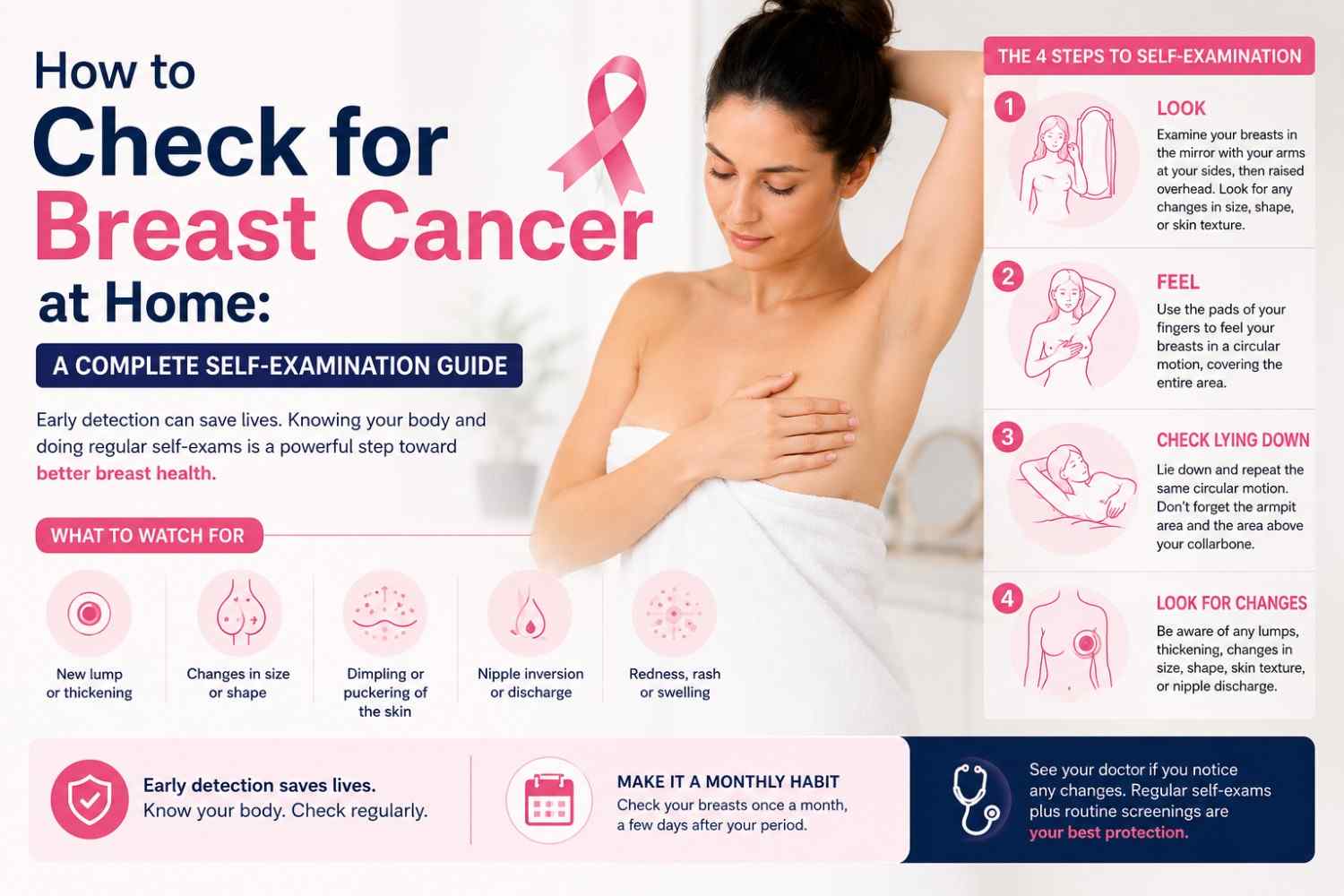
Step 1: Visual Inspection in Front of a Mirror
Stand in front of a mirror with your shoulders straight and arms relaxed at your sides.
Look carefully at both breasts and check for:
- Changes in size or shape
- Swelling in one breast
- Skin dimpling or puckering
- Redness or rash
- Changes in nipple position
- Inverted nipples
- Visible lumps or bulges
- Unusual skin thickening
Next, raise your arms above your head and observe the breasts again.
Then place your hands firmly on your hips and tighten your chest muscles. Lean slightly forward and check for any abnormal changes.
What is Normal?
Most women naturally have slight differences between their breasts. Minor asymmetry is usually normal.
Step 2: Check Your Breasts While Standing
Many women find it easier to examine their breasts while showering because wet skin allows fingers to glide smoothly.
How to Examine
Use the pads of your three middle fingers.
Apply three levels of pressure:
- Light pressure for tissue just beneath the skin
- Medium pressure for deeper tissue
- Firm pressure to examine tissue close to the chest wall
Move your fingers in small circular motions.
Follow a Pattern
Choose one method and stick to it every month:
Circular Method
Start at the outer edge of the breast and move in circles toward the nipple.
Vertical Method
Move your fingers up and down across the breast in straight lines.
Wedge Method
Start at the nipple and move outward like the spokes of a wheel.
Areas to Check
Examine:
- Entire breast area
- Under the breast
- Around the nipple
- Upper chest area
- Collarbone region
- Armpits
Breast cancer can sometimes develop in the lymph nodes under the arm before becoming noticeable in the breast itself.
Step 3: Examine Your Breasts While Lying Down
Lie flat on your back.
Place a pillow under your right shoulder and put your right arm behind your head.
Using your left hand, examine the right breast using small circular motions.
Repeat the same process for the left breast.
Make sure you cover the entire breast tissue from:
- Collarbone to upper abdomen
- Breastbone to armpit
Gently squeeze the nipple and check for any discharge.
Signs of Breast Cancer You Should Never Ignore
While performing a breast self-examination, look for the following warning signs:
Breast Lump
A new lump or thickened area is one of the most common symptoms of breast cancer.
The lump may feel:
- Hard
- Irregular in shape
- Painless in many cases
However, not all cancerous lumps are painless.
Changes in Breast Size or Shape
Sudden enlargement, shrinkage, or distortion of one breast may require medical evaluation.
Skin Dimpling
Skin that resembles an orange peel or appears dimpled can be a sign of underlying breast cancer.
Nipple Changes
Watch for:
- Inverted nipples
- Nipple retraction
- Scaling around the nipple
- Persistent itching
Nipple Discharge
Any spontaneous discharge, particularly:
- Bloody discharge
- Clear fluid
- Discharge from a single breast
should be evaluated by a specialist.
Breast Pain
Although breast pain is usually caused by non-cancerous conditions, persistent pain in one area should not be ignored.
Swelling in the Armpit
Enlarged lymph nodes under the arm may sometimes indicate breast cancer spread.
What Does a Cancerous Lump Feel Like?
A cancerous breast lump may:
- Feel hard or firm
- Have uneven borders
- Remain fixed in place
- Be painless initially
However, breast cancer symptoms vary from person to person. Any new lump should be examined by a healthcare professional.
Who Is at Higher Risk of Breast Cancer?
Certain factors can increase breast cancer risk:
- Family history of breast cancer
- Increasing age
- Obesity
- Smoking
- Alcohol consumption
- Hormonal therapy
- Late menopause
- Previous breast abnormalities
Women with a family history should undergo regular screening and consult a breast cancer specialist regarding risk assessment.
Limitations of Breast Self-Examination
While self-exams are useful, they have limitations.
A breast self-exam:
- Cannot detect all breast cancers
- Cannot determine whether a lump is cancerous
- Should not replace mammograms or clinical examinations
The best approach combines:
- Breast awareness
- Regular clinical checkups
- Mammography when recommended
- Timely medical consultation
When Should You See a Breast Cancer Specialist?
Schedule an appointment immediately if you notice:
- A new breast lump
- Persistent breast pain
- Skin changes
- Nipple discharge
- Nipple inversion
- Swelling in the breast or armpit
Early evaluation can provide peace of mind and ensure prompt treatment if needed.
Expert Breast Cancer Care in Lucknow
If you are concerned about any breast-related symptoms, professional evaluation is essential. Dr. Kamlesh Verma, a trusted breast cancer surgeon in Lucknow, offers comprehensive breast cancer diagnosis, screening, surgical treatment, and personalized care.
At CareMyCancer, patients receive advanced breast cancer management using modern diagnostic techniques and evidence-based treatment approaches. The goal is to ensure early detection, accurate diagnosis, and the best possible outcomes for every patient.
Conclusion
Learning how to check for breast cancer at home is an important step toward maintaining breast health. Monthly breast self-examinations can help you recognize normal breast tissue and detect unusual changes early. While self-exams are not a substitute for professional screening, they play a valuable role in breast cancer awareness and early detection.
If you notice any unusual symptoms, do not delay seeking expert medical advice. Early diagnosis can make a significant difference in treatment success and long-term health.
For expert consultation and breast cancer care, contact CareMyCancer and schedule an appointment with Dr. Kamlesh Verma, Breast Cancer Surgeon in Lucknow.